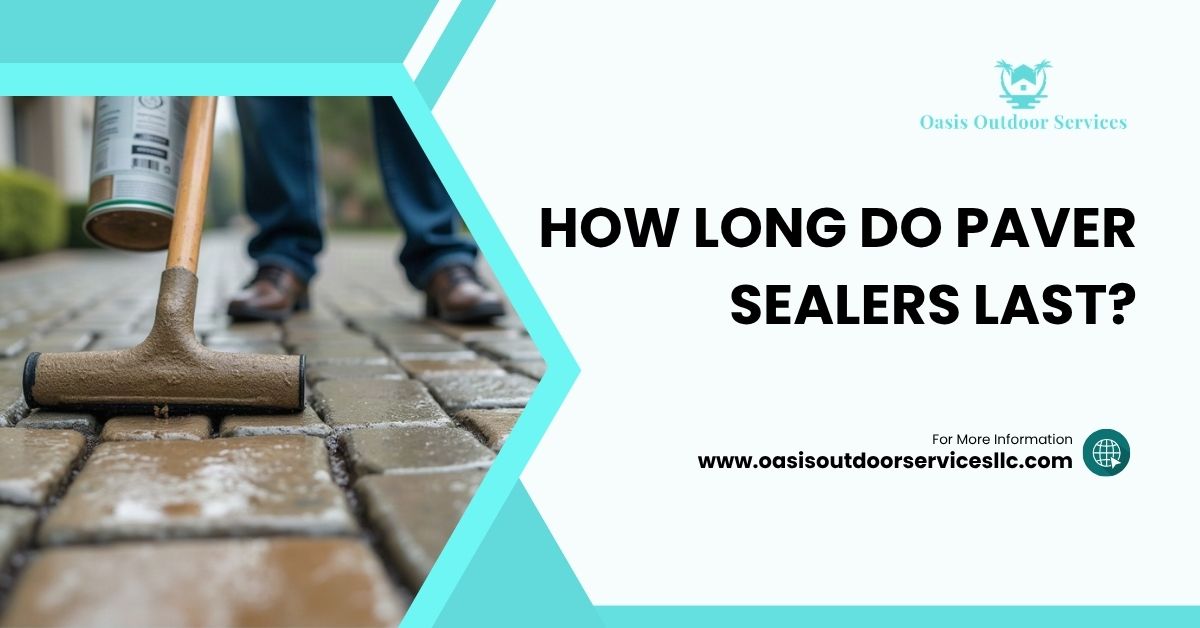
If you have pavers around your home, you may wonder, “How long do paver sealers last?” It is a common question for homeowners in Charlotte County, FL.
The short answer is that most paver sealers last about 2 to 5 years. The sealer can last longer or shorter depending on the type of sealer, weather, traffic, surface preparation, and how well you care for the pavers.. Some premium products can last longer under the right conditions. Alliance Gator+1
At Oasis Outdoor Services LLC, we help homeowners protect and improve their outdoor spaces with proper paver care and sealing. Here is what you should know about paver sealer life and when it may be time to reseal.
Paver sealer is a protective coating or treatment applied to concrete, brick, or natural stone pavers. It can help protect the surface from stains, moisture, dirt, UV exposure, and everyday wear.
Depending on the product, a sealer may also:
Different sealers provide different levels of protection. Some are designed to penetrate the paver, while others form a protective film on the surface.
In general, homeowners can expect a quality paver sealer to last around 2 to 5 years.
For example, Alliance Gator states that many of its sealers have a typical life expectancy of 2 to 5 years, depending on the product and environment. Its guidance also notes that some natural-look products can have a longer expected lifespan. Alliance Gator
Techniseal also recommends waiting at least 2 to 3 years before recoating certain paver protectors rather than applying sealer every year. Applying too much sealer too often can lead to buildup, whitening, or peeling. Techniseal
This means sealing your pavers is not usually an annual job. The best schedule depends on the condition of the surface.
Several factors can affect how long your sealer lasts.
Charlotte County homeowners deal with plenty of sunshine, heat, humidity, rain, and changing weather conditions. Constant outdoor exposure can gradually break down a sealer.
UV exposure is especially important. Some sealers are designed to help protect pavers from the effects of ultraviolet rays, but no sealer lasts forever. Alliance Gator
A patio that is rarely used may keep its sealer longer than a busy driveway.
Driveways experience vehicle tires, turning, dirt, and oil exposure. Pool decks and patios may experience frequent foot traffic, furniture movement, food spills, and cleaning.
The more wear a surface receives, the sooner the protective layer may need attention.
Not every sealer is made the same.
Some products provide a natural, low-sheen appearance. Others create a satin or wet-look finish. Some are water-based, while others are solvent-based.
The expected life can vary by product. Always follow the manufacturer’s instructions for application and recoating.
Good preparation is one of the most important parts of a successful sealing job.
Pavers should be properly cleaned before sealer is applied. Dirt, grease, stains, and efflorescence can interfere with adhesion and penetration.
Manufacturers warn that simply pressure washing the surface may not be enough. Specialized cleaning may be needed to remove certain contaminants and prepare the pavers correctly. Alliance Gator+1
You do not always need to reseal your pavers just because a certain amount of time has passed.
Instead, look for signs that the sealer is wearing down.
One simple test is to place a few drops of water on the paver. If water quickly absorbs into the surface instead of beading, the protective treatment may be wearing away.
Other signs include:
If you are unsure, a professional can inspect the surface and determine whether cleaning, resealing, or another treatment is appropriate.
Usually, no.
Applying sealer too frequently can create problems. Techniseal specifically advises against applying a fresh coat every year because excessive product can build up on the surface and may contribute to whitening or peeling. Techniseal
Instead, wait until the existing sealer has worn enough to need another application. For many paver surfaces, this may be every 2 to 5 years.
The right timing can vary based on the product, surface, and conditions around your home.
New pavers generally should not be sealed immediately after installation.
For example, Alliance Gator recommends waiting at least 60 days before sealing dry-cast concrete pavers and advises homeowners to follow the paver manufacturer’s recommendations. Alliance Gator
Waiting allows the surface to go through its normal early curing and efflorescence process. Sealing too soon can create unwanted appearance or adhesion issues.
Proper maintenance can help you get more life from your investment.
Start by keeping the pavers clean. Remove leaves, dirt, food spills, oil, and other stains as soon as possible. Avoid using harsh cleaning methods or chemicals without checking whether they are safe for your specific sealer.
It is also important to avoid resealing simply because the surface looks a little dull. Have the existing coating evaluated first. Adding another layer over a sealer that is still in good condition can cause buildup.
Most importantly, proper cleaning and preparation should happen before resealing. A clean, dry surface gives the new treatment a better chance of performing as intended. Alliance Gator+1
So, how long do paver sealers last? For most homeowners, 2 to 5 years is a good general range, but the actual lifespan depends on the product, weather, traffic, preparation, and maintenance.
In Charlotte County, FL, keeping your pavers protected can help preserve their appearance and make outdoor areas easier to maintain. Whether you have a driveway, patio, walkway, or pool deck, regular cleaning and timely resealing can help extend the life and beauty of your pavers.
At Oasis Outdoor Services LLC, we are proud to serve homeowners in Charlotte County and help keep outdoor spaces looking clean, attractive, and well maintained. If your pavers look faded, stained, or worn, it may be time to have them evaluated.
Ready to give your pavers a fresh look? Contact Oasis Outdoor Services LLC to discuss professional paver cleaning and sealing for your Charlotte County property.